Trident Survey · Energy audit
New · Onboard systems energy and CO₂ audit

Less diesel, less CO₂, same comfort on board.

On board, electronics, air conditioning and generators often run for nothing: permanent standby, empty cabins kept cool, an under-loaded generator at anchor. We measure, define what must run in each vessel situation, then prove the savings in litres, tonnes of CO₂ and euros.

≈ 2 tof CO₂ avoided per year on electronics*
4 to 6.5 tmore with zone-by-zone air conditioning*
≈ 46%of electronics consumption avoidable*

* Typical 35 m yacht. Orders of magnitude, replaced by measurements on board before and after each action.

The finding

Emissions nobody looks at

On a 30 to 40 m yacht, onboard systems draw around 2.6 kW around the clock, and air conditioning accounts for 50 to 60% of electrical consumption. At anchor, all of it comes from a diesel generator: every litre burned is about 2.65 kg of CO₂.
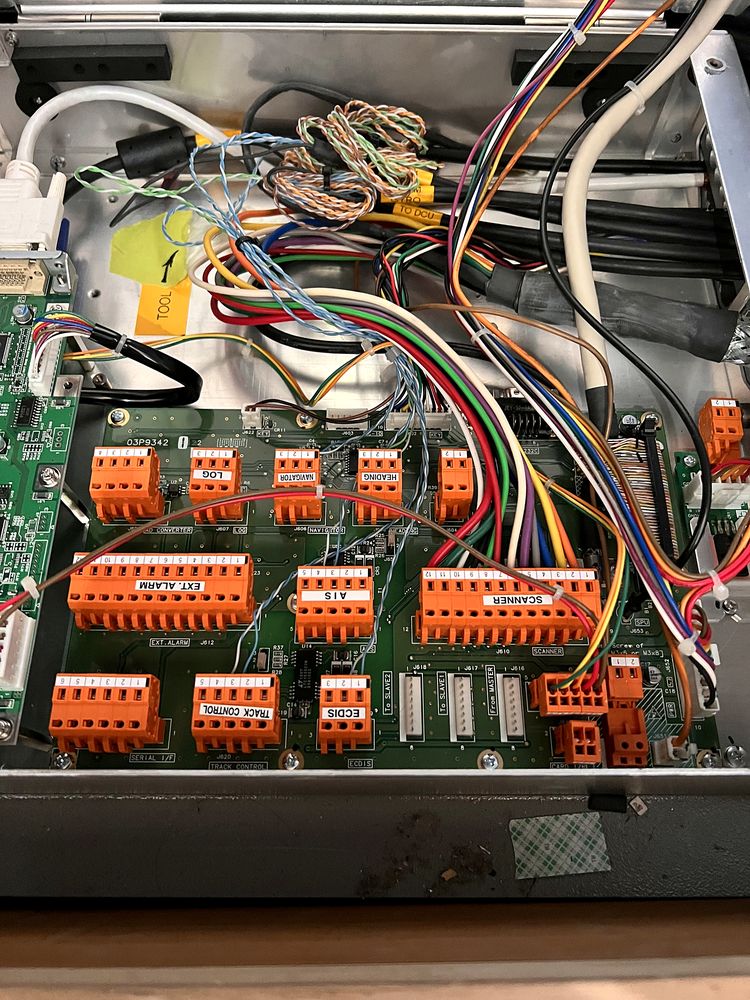
Wiring in a technical room
Every distribution circuit measured, item by item.
01

Standby

Amplifiers, screens, set-top boxes, radars in standby, two Starlink terminals: everything left powered without being used.

02

Empty cabins

The whole vessel kept at 19 °C around the clock, guests on board or not.

03

The generator

A diesel at 25% load burns about 0.36 L per kWh, against 0.25 L when well loaded: up to 40% wasted fuel.

04

Safety

AIS, VHF/GMDSS, alarms and deck cameras always stay powered. We never touch that core.

1 · Onboard electronics

Every piece of equipment has a target state

Navigation, IT, audio-video, CCTV: with the captain and the ETO, we define what should run, go to standby or be switched off depending on the vessel's situation. A sample matrix, then adjusted vessel by vessel.

SystemUnder wayAnchor, guestsAnchor, crewDock, crewWinter lay-up
Safety core (AIS, VHF, NMEA, alarms)
Starlink
Guest Wi-Fi
Server, NAS
UPSecoeco
Radars, sounder, autopilot
Navigation displays and PC
Guest saloon and cabin AV
Deck and access CCTV
Interior CCTV

on · standby or reduced · off

≈ 2 to 3.8 tof CO₂ avoided per year, depending on the marina's country (≈ 600 L of diesel at anchor)
≈ 9,000 kWhavoided per year, 46% of electronics consumption
€4,200 to €6,600per year: €4,200 excl. VAT for a commercial yacht, €5,200 to €6,600 incl. VAT for a private yacht

Typical 35 m yacht, 400 h under way, 2,300 h at anchor, 4,000 h at the dock. CO₂ is saved mostly at the generator; money mostly at the dock, where electricity is expensive and rising.

Solutions

From manual to automated, three cumulative levels

Level one applies the day after the audit. The next two turn discipline into automation.

1

Manual

Checklists per situation ("arriving at the dock", "guests leaving", "lay-up"), labelled breakers, standby settings in the equipment. Immediate savings, no hardware.

2

Semi-automatic

IP-controlled outlets and PDUs, PoE scheduling on switches, "Under way · Anchor · Dock · Lay-up" scenes on the onboard automation screen.

3

Automated

Digital circuit switching, automatic situation detection (shore power, engines, GPS, geofencing), sub-metering and a remote dashboard.

Every automatic shutdown keeps an immediate manual override, and restarts follow a set order: power, network, then equipment.
2 · Zone-by-zone air conditioning

Empty cabins at 26 °C, occupied zones at 19 °C

Today the whole vessel is often kept at 19 °C around the clock. Cabin-by-cabin control lets empty zones rise to 26 °C, with humidity controlled, and brings them back to 19 °C on presence detection or according to the guest schedule, before they arrive.

4 to 6.5 tof CO₂ avoided per year (≈ 1,300 L of diesel at anchor)
≈ 28%of air-conditioning consumption, about 14,800 kWh per year
€6,600 to €10,300per year: €6,600 excl. VAT for a commercial yacht, €8,200 to €10,300 incl. VAT for a private yacht

A sensor per cabin, controllable fan coils, occupancy detection, a link with the onboard automation. Trident quantifies and specifies; the vessel's HVAC contractor implements.

3 · Other levers

Four further opportunities

Ranked by expected CO₂ impact. Each saving is quantified on your vessel through before-and-after measurement.

01

Lithium and generator sharing

The biggest lever at anchor.

  • Load profile study
  • One well-loaded generator rather than two half-loaded
  • LiFePO4 bank: silent nights without the generator
02

Drives, water heaters, LED

Hotel loads running flat out.

  • Variable speed drives on pumps and fans
  • Water heaters scheduled to occupancy
  • LED and automatic shut-off in empty zones
03

TimeZero and weather routing

Propulsion, at the heart of our navigation expertise.

  • Optimised departure, route and speed
  • Litres per mile on the bridge displays
  • Training for the captain and officers
04

Real-time measurement

What proves every other saving.

  • Sub-metering of every load
  • Dashboard on board and remote
  • Monthly or annual CO₂ and cost report
Refit

What newer equipment changes

Age adds little to a device's consumption; the generation gap is what matters. The audit puts a figure on that gain, item by item, to inform a refit already under consideration.

UPS

From about 93% to 97% efficiency, 99% in eco mode: losses roughly halved.

Radars

Solid-state models start almost instantly, so they can be switched off rather than left in standby.

Audio amplifiers

Class D with deep standby replaces class AB amplifiers that draw power at idle.

Displays

LED backlighting replaces far hungrier CCFL on navigation displays, TVs and touch panels.

Servers and network

SSDs, mini servers, low-power switches and scheduled PoE: the IT base load shrinks.

Starlink and batteries

Starlink Gen 3 draws over 30% less than Gen 2; lithium allows nights at anchor without the generator.

Method

Measure before, measure after: proven savings

The figures on this page are orders of magnitude. On your vessel we replace them with a baseline measurement, then a measurement after each action, in the same situations.

Baseline

2 to 4 weeks of logging at the dock and at anchor: consumption of every load and diesel through flow meters.

Audit

Interview with the captain and ETO, standby inventory, situation matrix, levers quantified in CO₂, litres and euros.

Actions

Checklists that apply the next day, specifications for automation, air conditioning and the battery bank.

Measure after

Same duration, same situations: litres, kWh, euros and tonnes of CO₂ actually avoided, then real-time monitoring.

Independence

A diagnosis, not a hardware sale

Trident Survey only sells the diagnosis and the measurement: implementation is quoted separately by the contractors the vessel chooses. The audit can be ordered on its own or alongside the technical inventory.

Flash · 2 daysFull · before / after measurementFollow-up · annual CO₂ report
Contact

At your service

Tell us about the vessel, its yearly programme and whether it operates commercially or privately — we'll come back to you promptly with an audit and baseline measurement proposal.

info@tridentsurvey.fr